What are Stock Trading Signals?

Beginners often find stock trading complex, especially when deciding the right time to buy or sell a stock. Many investors use stock trading signals to help them make more informed decisions. These signals alert traders or suggest actions based on market analysis, highlighting potential trading opportunities. By understanding how trading signals work, beginners can learn how markets behave and how traders identify possible entry and exit points.
 | Minimum Deposit: $100 Regulated by: CBI, BVI, FSC, ASIC, FSCA, JFSA, FFAJ Crypto: Yes |
What Are Stock Trading Signals?
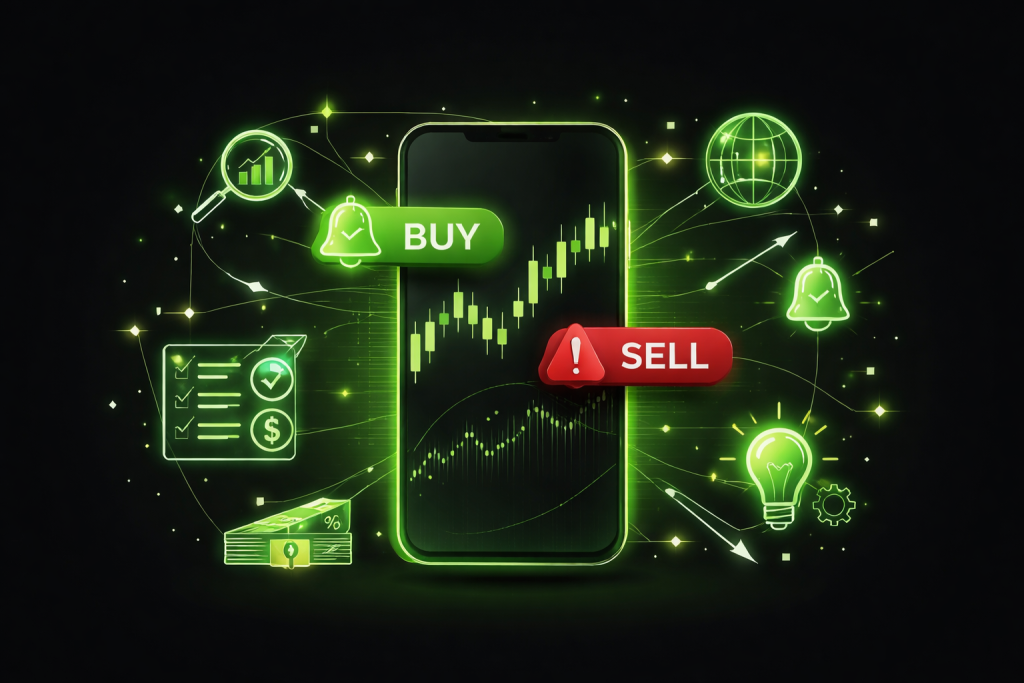
Stock trading signals alert traders or recommend when to buy or sell a specific stock. Analysts or algorithms generate these signals using market analysis to help traders identify potential opportunities in the market.
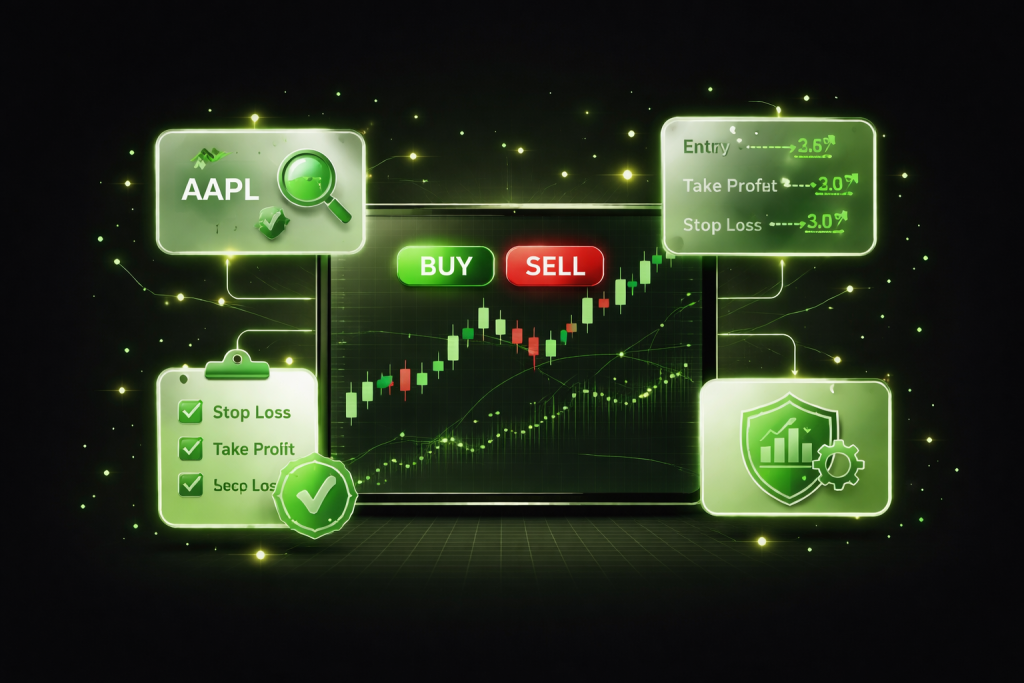
A trading signal usually provides key information, including which stock to trade, whether to buy or sell, and the price levels for entering or exiting a position. Signals may also offer risk management guidance, such as stop-loss and take-profit levels.
In simple terms, a stock trading signal notifies traders or suggests that a particular market condition could create a trading opportunity.
 | Minimum Deposit: $50 Regulated by: AUSTRAC, BAFIN, CIMA, ESCA, CySEC, FSC, FMA, MAS, TFG, VFSC Crypto: Yes |
How Stock Trading Signals Work
Analysts or algorithms create trading signals by analyzing various types of market data. They aim to identify patterns or trends that indicate where a stock’s price might move next. Traders can generate signals using several different methods.
Technical analysis
Traders use technical analysis to study historical price movements and chart patterns. They apply indicators such as moving averages, momentum indicators, and support and resistance levels to detect potential price trends. For example, when a short-term moving average crosses above a long-term moving average, it signals that the price may move higher.
Fundamental analysis
Traders use fundamental analysis to focus on real-world factors that influence a company’s value. Events such as earnings reports, economic data releases, industry developments, or interest rate changes can generate signals that suggest potential buying or selling opportunities.
Algorithmic or automated systems
Modern trading platforms use algorithms and artificial intelligence to scan markets continuously. These systems analyze large amounts of data and generate signals automatically when they detect certain conditions.
 | Minimum Deposit: $25 Regulated by: FSC, MISA Crypto: Yes |
What Information Is Included in a Trading Signal?
Most trading signals include several key elements that guide traders on how to execute a trade.
Trade direction
This indicates whether the trader should buy (go long) or sell (go short).
Entry price
The suggested price at which a trader should open the trade.
Take-profit level
The price level at which the trader may close the position to secure profits.
Stop-loss level
The price level that limits losses if the trade moves in the wrong direction.
Timeframe
Signals may indicate whether the trade idea is intended for short-term, medium-term, or longer-term trading.
These components help traders follow structured trading plans rather than making decisions based purely on emotion.
 | Minimum Deposit: $10 Regulated by: ASIC, BaFin, CMA, CySEC, DFSA, FCA, SCB 73-89 % of retail investor accounts lose money when trading CFDs Crypto Yes (only CFDs) |
Types of Stock Trading Signals
There are several different types of trading signals used in the stock market.
Manual signals
Professional traders or analysts create manual signals by studying charts, market conditions, and financial news. These signals rely on their experience and interpretation.
Automated signals
Computer algorithms generate automated signals by analyzing market data using predefined rules or indicators. Traders often use these signals in automated trading systems.
Signal services
Some companies provide trading signals through subscription services. These signals may be delivered through trading platforms, mobile apps, email alerts, or messaging channels.
 | Minimum Deposit: $50 Regulated by: CySEC, ASIC, FSA, SVG, FSCA Crypto: Yes |
Advantages of Using Trading Signals
Trading signals can offer several benefits, particularly for beginners. They can save time because traders do not always need to analyze the markets themselves. Signals also rely on structured data analysis, which may help reduce emotional decision-making.
For new traders, signals can also be educational. By observing why signals are generated, beginners can learn how experienced traders analyze price movements and market conditions. Signals can also help traders react quickly to market changes, especially when they are generated automatically.
 | Minimum Deposit: $5 Regulated by: FSC Crypto: Yes (not available under CySEC (EU) or DFSA (MENA). |
Risks and Limitations
While trading signals can be useful tools, they are not guaranteed to be accurate. Financial markets are influenced by many unpredictable factors, and no analysis method can predict price movements with complete certainty. Some signal providers may also produce low-quality signals, which is why traders should always evaluate the reliability of a service before relying on it.
It is generally recommended that traders use signals as one part of a broader trading strategy rather than relying on them entirely.
 | Minimum Deposit: $0 Regulated by: FSCA, FSA, FCA, FSC, CMA Crypto: Yes |
Example of a Stock Trading Signal
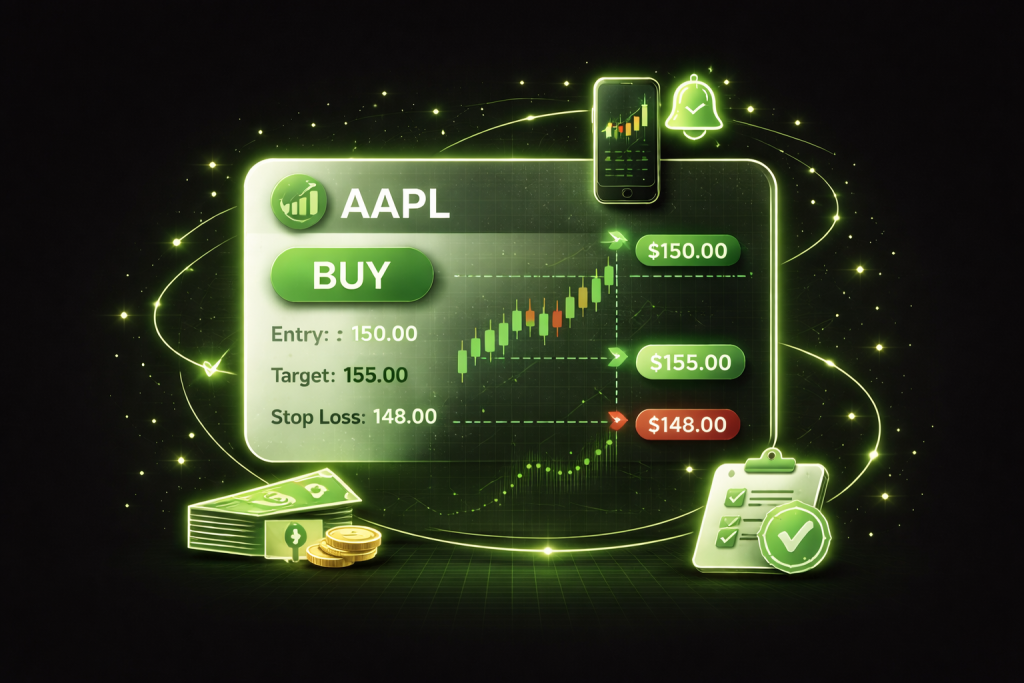
A simple example of a trading signal might look like this:
- Stock: Apple
- Action: Buy
- Entry Price: $180
- Take-Profit: $190
- Stop-Loss: $175
This signal suggests buying the stock at $180, aiming to sell at $190 if the price increases, while limiting potential losses by exiting the trade at $175 if the price falls.
 | Minimum Deposit: 20 USD (Cent) Regulated by: FSA, FSC, FSCA, CMA, ASIC Crypto: Yes |
Pros and Cons of Stock Trading Signals
| ✓ Pros | ✕ Cons |
| Saves time by reducing the need for constant market analysis. | No guarantee of accuracy since markets are unpredictable. |
| Based on technical or fundamental data rather than emotions. | Traders may become overly dependent on signals. |
| Helpful for beginners learning how trading opportunities are identified. | Signal quality can vary between providers. |
| Automated signals can react quickly to market movements. | Many reliable signal services require paid subscriptions. |
| Provides structured trade ideas with entry and exit levels. | Signals can become outdated if market conditions change quickly. |
You might also like:
- AvaTrade Review
- MultiBank Group Review
- Elev8 Review
- Pepperstone Review
- FISG Review
- XM Review
- HFM Review
- PU Prime Review
- IUX Review
- FBS Review
In Conclusion
Stock trading signals are tools that help traders identify potential opportunities in the market by providing suggestions on when to buy or sell a stock. They are typically generated through technical analysis, fundamental analysis, or automated algorithms. While signals can save time and provide helpful insights, they should be used carefully and combined with proper research and risk management to support more informed trading decisions.
A stock trading signal is an alert or recommendation that suggests when to buy or sell a stock based on market analysis.
Trading signals can be created by professional analysts, experienced traders, or automated trading algorithms.
Trading signals are based on analysis and probability, but they are not guaranteed to be correct.
Yes, beginners can use trading signals to learn how traders analyze markets, but they should also develop their own understanding of trading.
Some trading platforms provide built-in signals, while others may require subscriptions to external signal services.
Yes, many signals are generated automatically using algorithms that scan market data.
Some free signals can be useful, but their quality may vary compared to paid services.
A stop-loss is a price level where a trade is automatically closed to limit potential losses.
No trading signal can guarantee profits because financial markets are unpredictable.
Traders should use signals as guidance while combining them with their own research and risk management strategies.
 ABOUT THE AUTHOR
See More
ABOUT THE AUTHOR
See More


Sidebar rates

