Crypto Guide: Cryptocurrency Wallets 2026

Unlike a traditional wallet, it doesn’t hold actual coins but instead stores public and private cryptographic keys that provide access to the coins on the blockchain.
What is a cryptocurrency wallet, and do I actually need one?
A cryptocurrency wallet is the tool you use to store, send, and receive crypto. It does not really “hold” your coins like a normal wallet holds cash. Instead, it protects the private keys that give you access to your crypto on the blockchain.
What happens if I lose my recovery phrase?
Your recovery phrase is like the master key to your crypto wallet. If you lose it and your phone, app, or hardware wallet stops working, you may not be able to recover your funds. And if someone else gets it, they can take your crypto.
Crypto Guide: Cryptocurrency Wallets 2026
How Cryptocurrency Wallets Operate: The Role of Public and Private Keys
Cryptocurrency Wallets 2026
- How Cryptocurrency Wallets Operate: The Role of Public and Private Keys
- Types of Cryptocurrency Wallets
- More About Cryptocurrency Wallets
- Software Wallets
- Mobile Wallets
- Web-Based Wallets
- Hardware Wallets
- Benefits of Using Hardware Wallets
- Popular Hardware Wallet Examples
- Paper Wallets
- Custodial vs. Non-Custodial Wallets
- Choosing Between Custodial vs. Non-Custodial
- Cryptos – A Booming Asset Class
- Getting Involved in the Cryptocurrency Market
- Pros and Cons
- In Conclusion
- Frequently Asked Questions
How Cryptocurrency Wallets Operate: The Role of Public and Private Keys

At the core of how crypto wallets work are two cryptographic keys: the public key and the private key. The public key is akin to an account number; it is shared with others to receive funds. On the other hand, the private key is more like a password, granting the owner access to their funds and the ability to sign transactions.
The private key must remain confidential, as anyone with access to it can control the associated cryptocurrency. When a transaction is initiated, the private key is used to generate a unique digital signature, which is then verified by the network using the corresponding public key.
Wallet Addresses: The Key to Crypto Transactions
Every cryptocurrency wallet generates a wallet address, which is a compressed and shortened version of the public key. This wallet address serves as the destination for any funds sent to the wallet.
When a user wishes to receive cryptocurrency, they provide their wallet address to the sender, who then inputs this address in the transaction.
The transaction is then broadcast to the network, where it is confirmed and added to the blockchain.
Types of Cryptocurrency Wallets
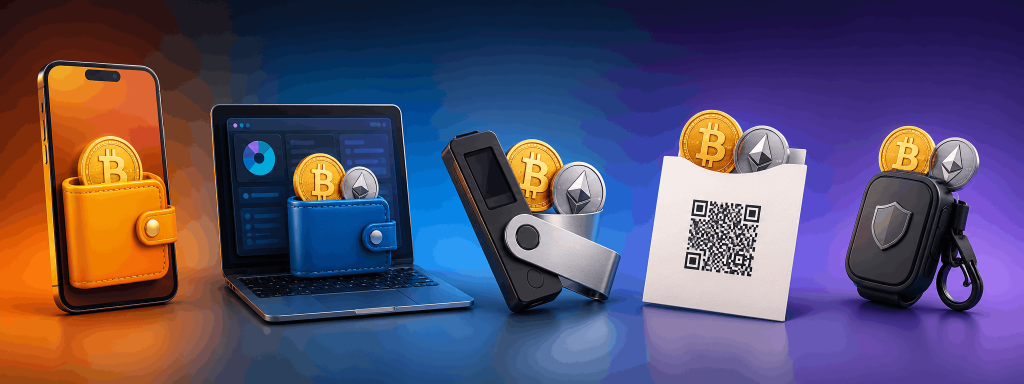
Cryptocurrency wallets are available in the following types of crypto wallets:
- Hot Wallets vs. Cold Wallets
- Software Wallets
- Desktop Wallets
- Mobile Wallets
- Web-Based Wallets
- Hardware Wallets
- Paper Wallets
- Custodial vs. Non-Custodial Wallets
Hot Wallets vs. Cold Wallets
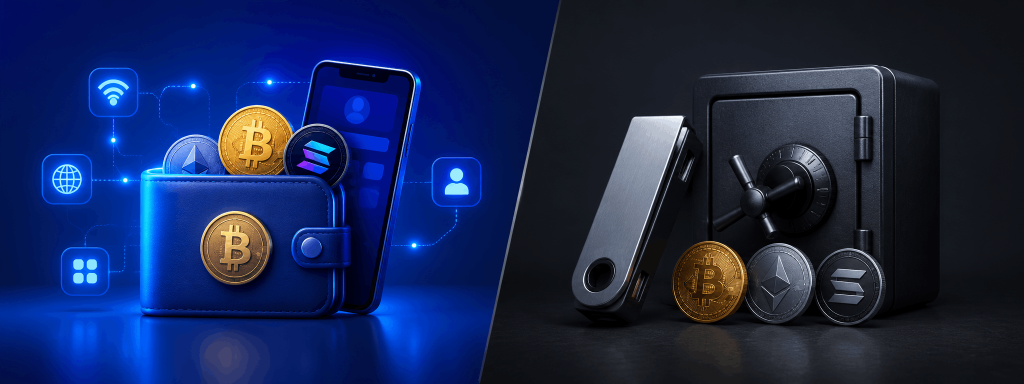
At the most fundamental level, cryptocurrency wallets are categorized into hot wallets and cold wallets, with hot wallets being connected to the internet and offering convenience for easy access to cryptocurrencies. Each type offers distinct features and security paradigms.
Understanding the dichotomy between these two types is crucial for aligning your wallet choice with your security needs and transaction habits.
Defining Hot Wallets
Hot wallets are cryptocurrency wallets that remain connected to the internet, facilitating quick and convenient access to digital assets. Due to their accessibility and ease of use, these wallets are predominantly used for everyday transactions.
Hot wallets come in various forms, including desktop applications, mobile apps, and web-based platforms.
Characteristics of Hot Wallets:
- Instant Accessibility: Users can readily access their funds from anywhere with an internet connection.
- User-Friendly Interfaces: Designed with intuitive interfaces suitable for both novices and experienced users.
- Versatility: Support for multiple cryptocurrencies and integration with various services and platforms.
- Real-Time Transactions: Enable swift execution of transactions, making them ideal for active traders and frequent transactors.
Defining Cold Wallets
Cold wallets, in contrast, are offline storage solutions designed to provide enhanced security for cryptocurrency holdings. By keeping the private keys disconnected from the internet, cold wallets significantly reduce the risk of unauthorized access and cyberattacks. These wallets can come in various forms, like USB sticks or even paper, highlighting their advantages in security over hot wallets.
Cold wallets are typically embodied in hardware devices or physical media like paper.
Characteristics of Cold Wallets:
- Enhanced Security: Isolation from the internet mitigates exposure to hacking and malware threats.
- Long-Term Storage: Ideal for storing large amounts of cryptocurrency over extended periods.
- Physical Control: Ownership is maintained through physical possession of the wallet device or medium.
- Reduced Convenience: Accessing funds requires physical interaction with the wallet, making it less suitable for frequent transactions.
Key Differences Between Hot and Cold Wallets
| Feature | Hot Wallets | Cold Wallets |
| Internet Connection | Always connected to the internet. | Remains offline except when used. |
| Security Level | Lower security due to exposure to online threats. | Higher security because private keys stay offline. |
| Ease of Use | Very convenient for daily transactions. | Less convenient for frequent transactions. |
| Best For | Active traders and regular crypto users. | Long-term investors and large holdings. |
| Risk of Hacking | Higher risk from malware, phishing, and cyberattacks. | Significantly lower risk of remote hacking. |
| Transaction Speed | Fast and immediate access to funds. | Requires connecting or accessing the device before transactions. |
| Cost | Usually free to use. | Hardware wallets often require purchasing a device. |
| Private Key Storage | Stored on an internet-connected device or application. | Stored offline on a hardware device, paper wallet, or air-gapped system. |
| Recovery Options | Recovery depends on seed phrases and wallet provider features. | Recovery relies primarily on securely stored seed phrases. |
| Popular Examples | MetaMask, Trust Wallet, Coinbase Wallet, Exodus. | Ledger, Trezor, Keystone, Tangem. |
| Suitable for Small Balances | Yes. Ideal for spending and trading funds. | Generally unnecessary for small amounts. |
| Suitable for Large Balances | Not recommended due to security risks. | Recommended for storing substantial crypto holdings. |
| Protection Against Physical Loss | App can often be reinstalled with a recovery phrase. | Physical device loss is recoverable with a backup seed phrase, but poor backup practices can lead to permanent loss. |
| Common Use Cases | Trading, staking, DeFi, NFTs, and everyday crypto transactions. | Long-term storage, institutional custody, and protecting investment portfolios. |
Pros and Cons
| ✓ Pros | ✕ Cons |
| Immediate Access – Funds can be accessed, sent, and received instantly, making hot wallets ideal for active traders and everyday crypto transactions. | Security Risks – Being connected to the internet increases exposure to cyberattacks, malware, and hacking attempts. |
| Ease of Use – User-friendly interfaces and simple setup processes make hot wallets accessible to both beginners and experienced users. | Vulnerability to Phishing – Users may be targeted by fraudulent websites, emails, or apps designed to steal wallet credentials and private keys. |
| Multi-Platform Support – Available across desktops, smartphones, tablets, and web browsers, allowing convenient access from multiple devices. | Dependence on Third Parties – Some hot wallets rely on external providers or cloud-based services, introducing additional trust and security considerations. |
| Integration Capabilities – Easily connects with cryptocurrency exchanges, payment platforms, DeFi protocols, and NFT marketplaces. | Limited Control – Certain custodial hot wallets do not give users full control over their private keys, increasing reliance on the wallet provider. |
Software Wallets

Software wallets represent a versatile and widely used category of hot wallets, offering a blend of convenience and functionality tailored to diverse user needs.
When setting up a crypto wallet, it is crucial to choose the right type and implement the necessary security measures to safeguard cryptocurrency assets.
These wallets exist in various formats, including desktop applications, mobile apps, and web-based platforms, each catering to specific use cases and preferences.
Desktop Wallets

Desktop wallets are software applications installed directly onto a user’s computer, providing a secure and accessible means of managing cryptocurrencies.
They offer a balance between security and convenience, making them a popular choice among both casual users and seasoned investors.
Features of Desktop Wallets:
- Enhanced Security Measures: Since the private keys are stored locally on the user’s computer, security largely depends on the user’s practices and system protection measures.
- Wide Cryptocurrency Support: Many desktop wallets support multiple cryptocurrencies, enabling users to manage diverse portfolios from a single interface.
- Advanced Functionalities: Some desktop wallets offer additional features such as integration with hardware wallets, support for decentralized exchanges, and customizable transaction fees.
- Offline Capabilities: Certain desktop wallets allow for offline transaction signing, adding an extra layer of security by minimizing online exposure.
Popular Desktop Wallets:
- Exodus: Known for its intuitive interface and extensive cryptocurrency support.
- Electrum: A lightweight Bitcoin wallet renowned for its speed and security features.
- Atomic Wallet offers support for numerous cryptocurrencies and includes built-in exchange services.
Advantages:
- Control Over Private Keys: Users retain full ownership and control of their private keys.
- Robust Security: When combined with proper security practices, desktop wallets provide a secure environment for managing funds.
- Feature-Rich Interfaces: Access to detailed transaction histories, portfolio tracking, and other advanced functionalities.
Disadvantages:
- System Vulnerabilities: Susceptible to malware and viruses if the host computer is compromised.
- Limited Mobility: Access is restricted to the specific device where the wallet is installed.
- Technical Requirements: Installation and maintenance may require a basic understanding of software management.
Mobile Wallets

Mobile wallets are applications designed specifically for smartphones and tablets, offering unparalleled convenience and portability. They are particularly suited for users who require on-the-go access to their cryptocurrency holdings and wish to conduct transactions seamlessly from their mobile devices.
Features of Mobile Wallets:
- Quick Transactions: Facilitate instant sending and receiving of cryptocurrencies, making them ideal for everyday purchases and peer-to-peer transfers.
- User-Friendly Design: Optimized interfaces for mobile devices ensure ease of navigation and operation.
- Additional Functionalities: Many mobile wallets incorporate features like QR code scanning for swift transactions, biometric authentication for enhanced security, and integration with mobile payment systems.
- Notifications and Alerts: Real-time updates on transaction statuses and market movements keep users informed and responsive.
Popular Mobile Wallets:
- Trust Wallet supports a wide array of cryptocurrencies and tokens, with a strong emphasis on security and privacy.
- Mycelium: A veteran Bitcoin wallet offering advanced features for both casual and professional users.
- Coinomi provides multi-currency support and a built-in exchange platform for convenient trading.
Advantages:
- Portability: Access your funds anytime and anywhere, provided there is an internet connection.
- Ease of Use: Simplified processes make it accessible even for cryptocurrency beginners.
- Additional Security Layers: Features like fingerprint recognition and facial ID add extra protection against unauthorized access.
- Versatility: Suitable for a variety of transactions ranging from small purchases to larger transfers.
Disadvantages:
- Security Risks: Loss or theft of the mobile device can pose significant security threats if proper precautions are not taken.
- Dependence on Device Security: Vulnerable to malware and phishing attacks targeting mobile platforms.
- Limited Storage: May not be ideal for storing large amounts of cryptocurrency due to inherent security concerns.
Web-Based Wallets
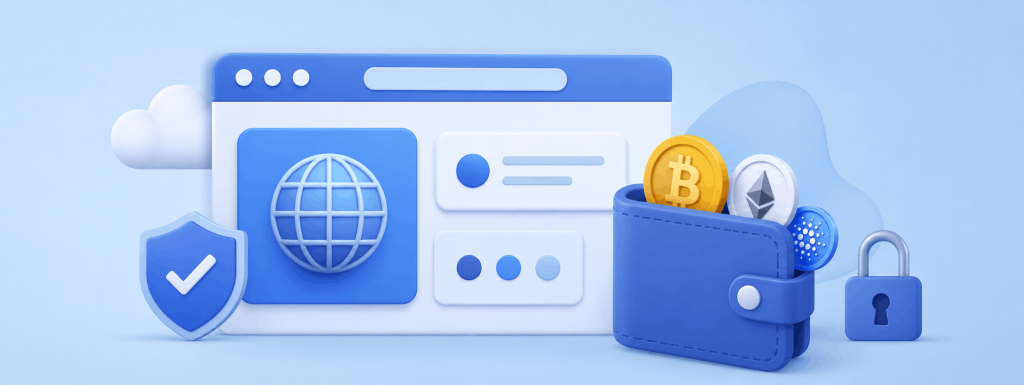
Web-based wallets, also known as online wallets, are accessed through web browsers and are hosted on cloud servers.
They offer unmatched accessibility, allowing users to manage their digital assets from any device with internet connectivity and a browser.
Features of Web-Based Wallets:
- Universal Access: Accessible from various devices, including desktops, laptops, tablets, and smartphones, without the need for specific software installations.
- Seamless User Experience: Designed for ease of use with straightforward interfaces suitable for quick transactions.
- Integrated Services: Often linked with cryptocurrency exchanges, enabling users to trade and manage assets within the same platform.
- Automatic Updates: Benefit from continuous updates and maintenance handled by the service provider, ensuring up-to-date features and security protocols.
Popular Web-Based Wallets:
- MetaMask: A widely used Ethereum wallet that facilitates interaction with decentralized applications.
- Blockchain.com Wallet offers support for multiple cryptocurrencies and provides additional services like trading and earning interest.
- Coinbase Wallet: Integrates seamlessly with the Coinbase exchange, providing an easy entry point for newcomers to the cryptocurrency space.
Advantages:
- Convenience: No installation required; simply log in through a web browser to access funds.
- Device Flexibility: Manage your assets from multiple devices and locations effortlessly.
- User-Friendly: Minimal setup and straightforward operation make it suitable for users with varying levels of technical expertise.
- Backup and Recovery Options: Providers often offer robust backup solutions to prevent loss of access due to forgotten passwords or other issues.
Disadvantages:
- Security Concerns: Storing private keys online increases vulnerability to hacking, phishing, and other cyber-attacks.
- Reliance on Third Parties: Users must trust the service provider to maintain the security and integrity of the wallet.
- Potential Downtime: Service outages or maintenance periods can temporarily restrict access to funds.
- Privacy Issues: Some web wallets may require personal information, compromising user anonymity.
Security Features of Software Wallets
Ensuring the security of software wallets involves a combination of built-in features and user practices. Key security mechanisms include:
- Encryption protects sensitive data by encoding it, making it unreadable without the appropriate decryption key.
- Two-Factor Authentication (2FA) adds an extra layer of security by requiring two forms of verification before granting access.
- Passphrase Protection: Utilizes complex passwords and seed phrases to secure wallet access and facilitate recovery.
- Regular Updates: Continuous software updates address vulnerabilities and enhance security protocols.
- Open-Source Code: Some wallets have publicly available code, allowing community scrutiny to identify and fix potential security flaws.
Conclusion on Software Wallets: Software wallets offer a versatile and convenient solution for managing cryptocurrencies, accommodating a wide range of user needs and preferences.
Hardware Wallets

In the realm of cryptocurrency storage solutions, hardware wallets stand out as one of the most secure and reliable options. These physical devices are engineered to provide robust protection for digital assets by keeping private keys isolated from online environments, thereby mitigating the risk of cyber threats.
Understanding Hardware Wallets
Hardware wallets are specialized electronic devices designed explicitly for storing cryptocurrency private keys offline. They function by securely generating and storing private keys within the device, ensuring that sensitive information never leaves the hardware. Transactions are signed within the device itself and then broadcast to the blockchain via a connected computer or mobile device, maintaining a secure environment throughout the process.
Key Characteristics of Hardware Wallets:
- Offline Storage: Private keys are stored in a secure, offline environment, significantly reducing exposure to hacking and malware.
- Compatibility: Support for a wide range of cryptocurrencies, allowing users to manage multiple assets through a single device.
- User Authentication: Incorporates security measures such as PIN codes and passphrases to prevent unauthorized access.
- Tamper-Resistant Design: Built with robust materials and security features to detect and prevent physical tampering attempts.
- Portability: Compact and durable design facilitates easy transportation and storage.
Benefits of Using Hardware Wallets
| Benefit | Description |
| Enhanced Security | Hardware wallets store private keys offline, protecting them from hackers, malware, phishing attacks, and other online threats. Transactions are signed within the device, ensuring sensitive information never leaves the wallet. |
| Protection Against Cyber Threats | Because hardware wallets are not constantly connected to the internet, they are highly resistant to remote hacking attempts, keyloggers, and malicious software. |
| Secure Backup and Recovery | Most hardware wallets provide recovery seed phrases that allow users to restore access to their crypto assets if the device is lost, stolen, or damaged. |
| Full Ownership and Control | Users maintain complete control of their private keys and funds without relying on exchanges, custodians, or third-party service providers. |
| Reduced Counterparty Risk | Since assets remain under the user's control, there is no exposure to exchange bankruptcies, platform hacks, or account freezes. |
| Multi-Currency Support | Many hardware wallets support thousands of cryptocurrencies and tokens, allowing users to manage diverse portfolios from a single device. |
| Cross-Platform Compatibility | Hardware wallets typically work with desktop and mobile devices across multiple operating systems, including Windows, macOS, Linux, Android, and iOS. |
| Software Wallet Integration | Many devices integrate with popular software wallets and DeFi applications, providing enhanced functionality while maintaining strong security. |
| Regular Security Updates | Manufacturers frequently release firmware updates to improve security, add support for new cryptocurrencies, and enhance device functionality. |
| User-Friendly Experience | Modern hardware wallets feature intuitive interfaces, guided setup processes, and on-device transaction confirmations, making them accessible even for less experienced users. |
Popular Hardware Wallet Examples
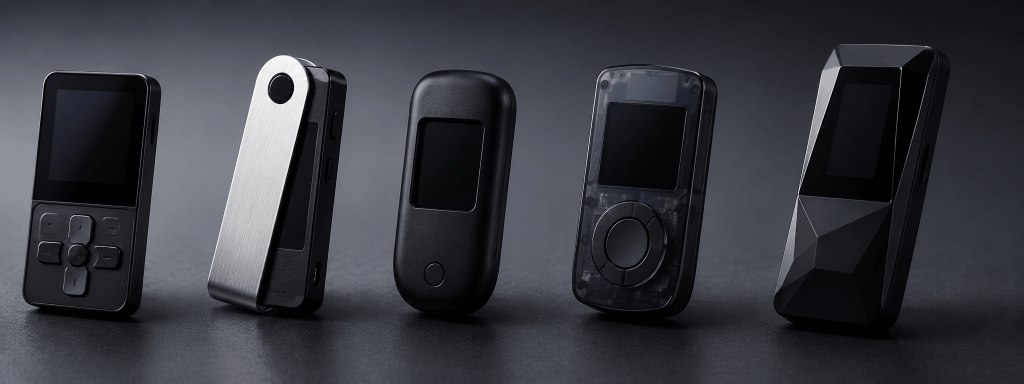
1. Ledger Nano Series
The Ledger Nano series, including the Ledger Nano S and Ledger Nano X, is among the most acclaimed hardware wallets in the market.
Features:
- Secure Element Chip: Utilizes a certified secure chip to safeguard private keys.
- Bluetooth Connectivity (Nano X): Enables wireless connection with mobile devices for increased convenience.
- Multi-Currency Support: Supports over 1,800 cryptocurrencies and tokens.
- Ledger Live App Integration offers a comprehensive application for managing assets, tracking portfolios, and conducting transactions.
- Robust Build Quality: Compact and durable design with a stainless steel cover for physical protection.
2. Trezor Model T
The Trezor Model T is a flagship hardware wallet known for its advanced security features and comprehensive cryptocurrency support.
Features:
- Touchscreen Interface: Provides an intuitive and secure method for entering PINs and passphrases directly on the device.
- Open-Source Software: Allows for community auditing and transparency.
- Wide Cryptocurrency Support: Compatible with over 1,000 digital assets.
- Shamir Backup offers a secure and innovative method for backing up recovery seeds.
- U2F Authentication: Can be used as a universal second-factor authentication device for added online security.
3. KeepKey
KeepKey is a hardware wallet that combines security with an elegant design and straightforward user experience.
Features:
- Large Display Screen: Facilitates easy transaction verification and management.
- Integration with ShapeShift allows for seamless cryptocurrency exchanges directly from the device.
- Robust Security Measures: Employs PIN protection and recovery sentence backup.
- Multi-Currency Support: Supports a variety of popular cryptocurrencies.
- Aluminum Casing: Provides durability and a premium look.
Conclusion on Hardware Wallets: Hardware wallets offer an unparalleled level of security for cryptocurrency storage, making them an indispensable tool for serious investors and security-conscious users.
Paper Wallets
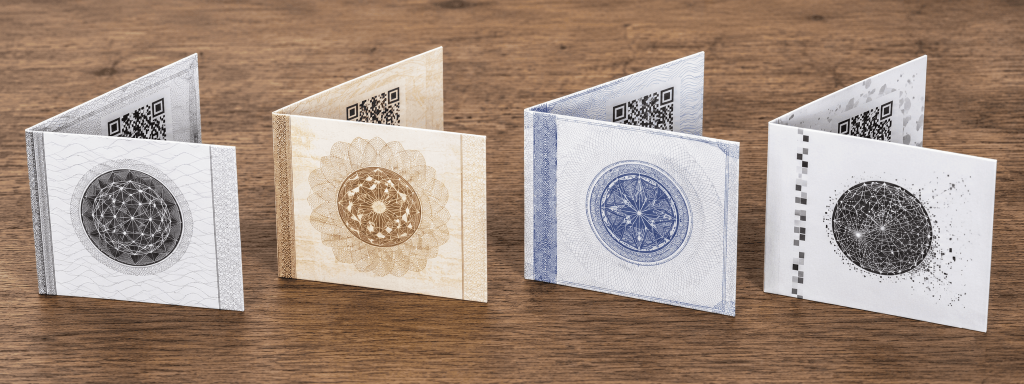
Paper wallets represent one of the most straightforward and cost-effective methods for storing cryptocurrencies offline. Despite their simplicity, they offer a high degree of security when created and managed correctly.
What is a Paper Wallet?
A paper wallet is a physical document that contains a printed copy of both the public and private keys required to access and manage cryptocurrency funds. These keys are often displayed as strings of alphanumeric characters and corresponding QR codes to facilitate easy scanning and transaction processing.
Key Characteristics of Paper Wallets:
- Offline Storage: Being a physical document, a paper wallet stores private keys offline, eliminating exposure to online threats such as hacking and malware.
- Cost-Effective: Requires no investment in hardware or software, making it an accessible option for all users.
- Simplicity: Easy to create and use without the need for advanced technical knowledge.
- Anonymity: Does not involve any digital footprint or association with online services, preserving user privacy.
Creating a Secure Paper Wallet
Creating a secure paper wallet involves meticulous steps to ensure that private keys are generated and stored without exposure to potential security risks. Follow this comprehensive guide to create a paper wallet safely:
Step 1: Prepare a Secure Environment
- Use a Clean Computer: Ensure that the computer used for generating the wallet is free from malware and viruses. Consider using a freshly installed operating system or a live boot from a trusted source.
- Disconnect from the Internet: For maximum security, disconnect your computer from all network connections before generating the wallet.
- Utilize Private Settings: Perform the process in a private and secure physical location to prevent any unwanted observation or interference.
Step 2: Choose a Reliable Paper Wallet Generator
- Select Trusted Services: Opt for reputable and open-source wallet generators such as BitAddress.org for Bitcoin or MyEtherWallet.com for Ethereum.
- Download Source Files: Instead of using the online version, download the generator’s source files from their official repository to use offline.
Step 3: Generate the Wallet
- Run the Generator Offline: Open the downloaded generator files in your browser while remaining disconnected from the internet.
- Follow Instructions: Follow the on-screen prompts to generate a new public and private key pair. Some generators may ask you to move your mouse randomly to create entropy and enhance security.
- Verify Information: Ensure that both keys are generated correctly and that the corresponding QR codes are clear and scannable.
Step 4: Print the Wallet
- Use a Secure Printer: Preferably use a printer that is directly connected to your computer via cable rather than a network printer to avoid potential interception.
- Print Multiple Copies: Create several copies to serve as backups, but be cautious about their storage.
- Use High-Quality Paper and Ink: To ensure longevity and legibility, print on durable paper with high-quality ink that resists fading and smudging.
Step 5: Securely Store the Wallet
- Choose Safe Storage Locations: Place the printed wallets in secure, dry, and discreet locations such as safes or safety deposit boxes.
- Protect from Physical Damage: Use protective sleeves or laminations to shield the paper from moisture, fire, and other physical threats.
- Avoid Digital Copies: Refrain from saving digital images or scans of the wallet to prevent digital exposure.
Additional Security Measures:
- Encrypt Private Keys: For added security, consider encrypting the private keys with a passphrase during generation, ensuring that only those with the passphrase can access the funds.
- Divide and Conquer: Store different copies in separate locations to mitigate the risk of total loss due to unforeseen circumstances.
- Destroy Digital Traces: After completing the process, delete any temporary files and clear your browser cache to eliminate residual data.
Using Paper Wallets Safely
Accessing and transacting funds from a paper wallet requires careful handling to maintain security:
Adding Funds to a Paper Wallet:
- Use the Public Address: To deposit cryptocurrencies, simply use the public address printed on the wallet as the recipient address in the transaction.
- Verify Transactions: Monitor the blockchain to confirm that the funds have been successfully transferred to the paper wallet address.
Spending or Transferring Funds:
- Import or Sweep Private Key: To access and spend the funds, you’ll need to import or ‘sweep’ the private key into a software wallet.
- Importing: Adds the private key to the software wallet, allowing access while keeping the funds linked to the original paper wallet address.
- Sweeping: Transfers the entire balance from the paper wallet to a new address in the software wallet, effectively emptying the paper wallet.
- Choose a Secure Software Wallet: Use a trusted and secure software wallet compatible with your cryptocurrency to perform the import or sweep.
- Conduct in Secure Environment: Perform the process in a secure and private setting, ensuring that your device is free from malware and connected through a secure network.
- Dispose of Used Paper Wallets Carefully: Once the funds have been transferred, destroy the physical paper wallet securely to prevent any potential misuse.
Advantages of Paper Wallets:
- Maximum Offline Security: Complete isolation from digital environments significantly reduces the risk of cyber-attacks.
- Cost-Effective Storage Solution: Requires minimal resources to create and maintain.
- Anonymity and Privacy: Does not involve personal information or third-party services.
- Simplicity: Straightforward creation and usage processes.
Disadvantages of Paper Wallets:
- Physical Vulnerability: Susceptible to damage, loss, or theft if not stored properly.
- No Partial Spending: Accessing funds often requires transferring the entire balance, which can be inconvenient.
- No Recovery Options: Loss or destruction of the paper wallet and backups results in permanent loss of access to funds.
- Technical Limitations: May be less suitable for users who require frequent access or transactions.
Conclusion on Paper Wallets: Paper wallets offer a secure and economical method for long-term storage of cryptocurrencies, especially for users who prioritize offline security and minimal interaction.
Custodial vs. Non-Custodial Wallets
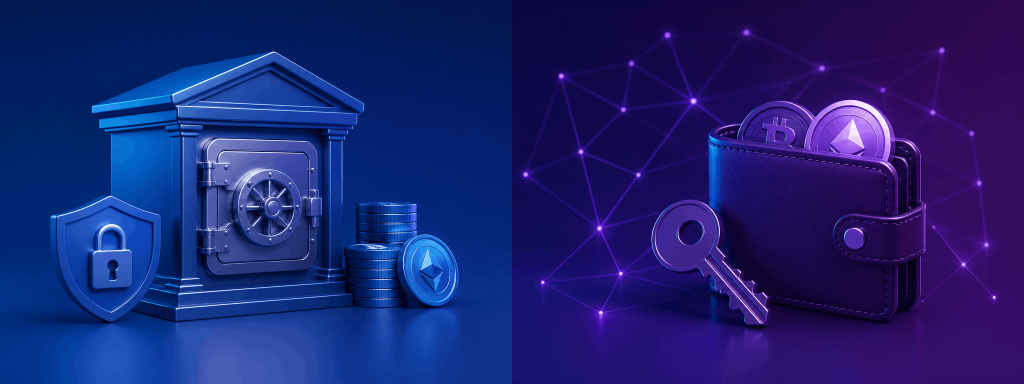
Another critical distinction in the realm of cryptocurrency wallets lies between custodial and non-custodial solutions.
This classification revolves around the control and ownership of private keys, significantly impacting security, responsibility, and user experience.
Understanding Custodial Wallets
Custodial wallets are services where a third-party entity, such as a cryptocurrency exchange or financial institution, holds and manages the user’s private keys on their behalf. In this arrangement, users entrust the custody of their digital assets to the service provider, who is responsible for securing and maintaining access to the funds.
Key Characteristics of Custodial Wallets:
- Third-Party Control: The service provider holds and controls the private keys, effectively managing access to the user’s funds.
- User Convenience: Simplifies the management process by handling security and recovery mechanisms.
- Integrated Services: Often accompanied by additional features such as trading platforms, staking services, and customer support.
- Regulatory Compliance: Many custodial services adhere to regulatory standards, including Know Your Customer (KYC) and Anti-Money Laundering (AML) protocols.
Examples of Custodial Wallets:
- Exchange Wallets: Wallets provided by platforms like Coinbase, Binance, and Kraken, which allow users to store and trade cryptocurrencies.
- Online Wallet Services: Platforms such as Blockchain.com and Crypto.com offer wallet services alongside other financial products.
- Payment Services: Companies like PayPal and Robinhood are offering cryptocurrency functionalities within their existing financial services.
Understanding Non-Custodial Wallets
Non-custodial wallets are solutions where users retain full control and ownership of their private keys and, consequently, their digital assets. These wallets do not involve third-party management, placing the responsibility for security and access entirely on the user.
Key Characteristics of Non-Custodial Wallets:
- User Control: Users are solely responsible for the generation, storage, and management of their private keys.
- Enhanced Privacy: Generally requires minimal personal information, preserving user anonymity.
- Direct Blockchain Interaction: Transactions are processed directly on the blockchain without intermediary involvement.
- Greater Security Potential: Eliminates reliance on third parties, reducing exposure to centralized points of failure or breaches.
Examples of Non-Custodial Wallets:
- Hardware Wallets: Devices like Ledger, Trezor, and KeepKey where users manage their own keys.
- Software Wallets: Applications such as Exodus, Trust Wallet, and MetaMask that provide user-controlled storage solutions.
- Paper Wallets: Physical documents containing private and public keys managed entirely by the user.
Comparative Analysis of Custodial and Non-Custodial Wallets
| Aspect | Custodial Wallets | Non-Custodial Wallets |
| Control over Funds | Private keys are held and managed by a third-party provider on behalf of the user. | Users retain full control and ownership of their private keys and assets. |
| Security | Security depends on the provider's infrastructure and practices, making it vulnerable to centralized breaches. | Security depends on the user's ability to safeguard private keys, eliminating centralized points of failure. |
| Convenience | Easy to use with features such as password recovery, account management, and integrated services. | Requires greater responsibility and technical understanding, with no recovery options if private keys are lost. |
| Privacy and Anonymity | Often requires identity verification and compliance with regulations, resulting in reduced privacy. | Typically offers greater privacy, with little or no personal information required. |
| Transaction Speed | Internal transactions within the provider's ecosystem may be processed quickly, though external transfers can face delays. | Transactions are processed directly on the blockchain, with speeds depending on network conditions. |
| Fees | May charge additional service or transaction fees determined by the provider. | Fees are generally limited to blockchain network costs, with users often able to adjust fee settings. |
| Risk of Censorship | Subject to regulatory requirements, account restrictions, or asset freezes imposed by the provider. | More resistant to censorship, allowing users to transact without intermediary approval. |
| Customer Support | Dedicated customer service is typically available to assist with account-related issues. | Limited formal support; users often rely on documentation, forums, and community assistance. |
| Best For | Beginners, casual investors, and users who prioritize convenience and support. | Experienced users who value security, privacy, and full control over their assets. |
| Examples | Coinbase, Binance, Kraken, Crypto.com. | MetaMask, Trust Wallet, Ledger, Trezor, Exodus. |
Choosing Between Custodial and Non-Custodial Wallets
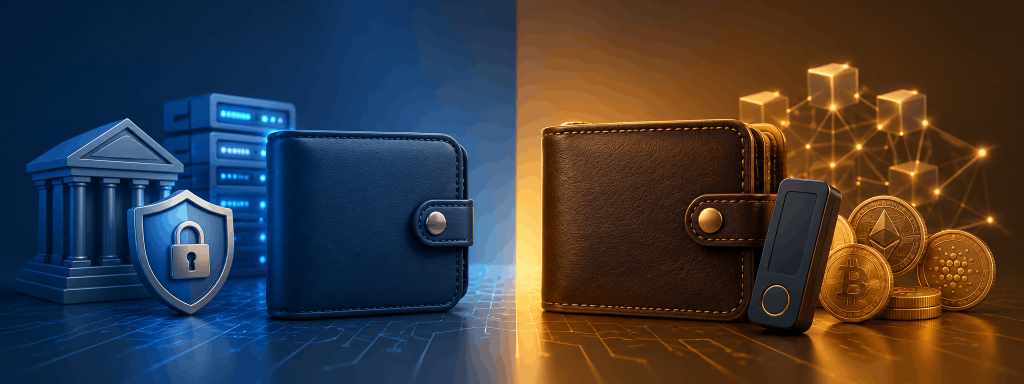
The decision between custodial and non-custodial wallets depends on individual preferences, risk tolerance, and intended usage:
Custodial Wallets Are Suitable For:
- Beginners: Users new to cryptocurrencies who prefer a guided and supportive environment.
- Active Traders: Individuals who frequently trade and benefit from integrated exchange services.
- Convenience Seekers: Users who prioritize ease of use and prefer not to manage private keys directly.
- Regulatory Compliance: Users who are comfortable with or require adherence to legal and regulatory standards.
Non-Custodial Wallets Are Suitable For:
- Security-Conscious Users: Individuals who prioritize maximum security and control over their digital assets.
- Privacy Advocates: Users who value anonymity and wish to minimize personal information disclosure.
- Long-Term Holders: Investors intending to hold cryptocurrencies over extended periods without frequent transactions.
- Decentralization Supporters: Individuals aligned with the principles of decentralization and self-sovereignty.
Conclusion on Custodial vs. Non-Custodial Wallets: By evaluating the pros and cons in relation to personal requirements and comfort levels, users can make informed decisions that align with their security needs and operational preferences.
Cryptos – A Booming Asset Class

With more and more institutions, retailers, and individuals using cryptocurrencies, the financial world is changing rapidly.
Thousands of new participants are entering the crypto market every day for different reasons, which include international and local money transfers, investment and other speculative purposes, crypto mining activities, etc.
Getting Involved in the Cryptocurrency Market

To get involved in the crypto market is really not complicated, especially with beginner-friendly wallets like KeepKey, Genesis, and Jaxx, where individuals can also exchange different crypto coins for one another.
Crypto wallets are not the only means of engaging in crypto activities, however. Cryptocurrencies can be traded with CFDs on cryptocurrency trading platforms.
Then, of course, there are cryptocurrency exchanges where fiat and cryptos can be exchanged. Some of these exchanges offer margin trading in the same way that forex/crypto trading platforms do.
In Conclusion
Cryptocurrency wallets are an essential tool for anyone looking to buy, store, send, or receive digital assets.
Whether you choose a hot wallet for convenience and everyday transactions or a cold wallet for enhanced security and long-term storage, understanding how different wallet types work is key to protecting your investments.
Frequently Asked Questions
Do I really need a cryptocurrency wallet to buy crypto?
Not always. Many exchanges allow you to buy and hold crypto on their platform. However, if you want full control over your assets and added security, transferring your funds to a personal wallet is generally recommended.
What’s the safest type of crypto wallet?
Cold wallets, especially hardware wallets, are widely considered the safest option because they store your private keys offline, making them much harder for hackers to access.
Can I have more than one crypto wallet?
Yes. Many crypto investors use multiple wallets. For example, they may keep a small amount in a hot wallet for everyday transactions and store larger holdings in a cold wallet for long-term security.
What happens if I lose my wallet or device?
As long as you have your recovery phrase (also called a seed phrase), you can usually restore access to your wallet on a new device. Without it, your funds may be permanently lost.
Is a crypto wallet the same as a bank account?
No. A crypto wallet doesn’t actually store your cryptocurrency. Instead, it stores the private keys that give you access to your assets on the blockchain.
Are crypto wallets free to use?
Many software wallets are free to download and use. However, hardware wallets typically require purchasing a physical device. Regardless of the wallet type, blockchain network fees may apply when sending transactions.
Can someone steal my crypto if they know my wallet address?
No. A wallet address is designed to be shared publicly. However, if someone gains access to your private keys or recovery phrase, they can take control of your funds.
Should beginners choose a custodial or non-custodial wallet?
It depends on your comfort level. Custodial wallets are generally easier for beginners, while non-custodial wallets offer greater control and ownership but require more responsibility.
Can I store different cryptocurrencies in the same wallet?
Many modern wallets support multiple cryptocurrencies, allowing you to manage Bitcoin, Ethereum, stablecoins, and other digital assets from a single application.
How do I choose the right crypto wallet?
Start by considering your goals. If you trade frequently, a hot wallet may be more convenient. If security is your top priority and you’re holding crypto long-term, a cold wallet is often the better choice. The best wallet is one that balances security, usability, and support for the cryptocurrencies you own.
 ABOUT THE AUTHOR
See More
ABOUT THE AUTHOR
See More


Sidebar rates

