What Is DeFi Lending? A Complete Beginner’s Guide 2026

DeFi lending, or decentralized finance lending, is a crucial component of the crypto ecosystem that drives liquidity in the digital asset market.
It enables users to lend and borrow funds directly, without relying on traditional banks or financial intermediaries.
What is DeFi lending and how does it work?
DeFi lending lets people lend or borrow crypto without using a bank. Instead, smart contracts handle everything automatically. Lenders can earn interest on their crypto, while borrowers put up collateral to access funds.
Is DeFi lending safe?
DeFi lending can be highly profitable, but the risks are just as real. A vulnerable smart contract, a major platform hack, a sudden market crash, or an unexpected liquidation can quickly turn gains into losses.
What Is DeFi Lending? A Complete Beginner’s Guide 2026
- What are liquidity pools in DeFi lending?
- How Do DeFi Lending Platforms Work?
- How to Use Digital Currency as Collateral in DeFi Lending
- What is Crypto Loan Liquidation?
- What are the best Decentralized lending platforms?
- Top Decentralized Lending Platforms
- Pros and Cons
- Conclusion
- Frequently Asked Questions
What are liquidity pools in DeFi lending?

Liquidity pools are shared pools of cryptocurrency that users deposit into a DeFi protocol.
These funds provide the liquidity needed for borrowers to access loans immediately, without waiting for a lender to approve the transaction.
Frequently Asked Questions
What is a liquidity pool in DeFi lending?
A liquidity pool is a collection of cryptocurrency assets locked in a smart contract that provides funds for lending, borrowing, and other decentralized finance activities. Users contribute their crypto to these pools and earn rewards or interest in return.
How do liquidity pools benefit DeFi lenders?
Liquidity pools allow lenders to earn passive income by supplying assets to a lending protocol. The deposited funds are made available to borrowers, and lenders receive a portion of the interest paid on those loans.
How Do DeFi Lending Platforms Work?
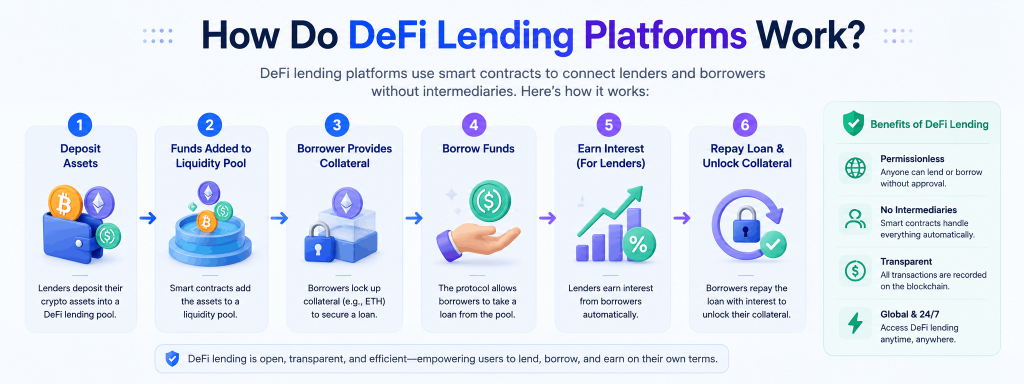
Traditional Lending vs. DeFi Lending
In the traditional financial system, lending is primarily handled by banks and institutional lenders, where borrowers receive funds in exchange for interest payments.
Common products include certificates of deposit (CDs), treasury bills (T-Bills), and repurchase agreements.
For example, when you deposit money into a savings account, the bank lends that money out and pays you a small interest, making you a “lender” without you actively managing the process.
Centralized Finance (CeFi) vs. DeFi Lending
In the crypto world, lending operates through both CeFi (centralized finance) and DeFi (decentralized finance) platforms.
With CeFi, platforms like BlockFi or Celsius take custody of your cryptocurrency, and you must complete a KYC (know-your-customer) form.
Although you can earn interest, this centralization introduces risks, such as potential hacks or mismanagement of funds, since the platform holds control over your assets.
On the other hand, DeFi lending protocols offer a more secure, transparent, and autonomous way to lend your crypto assets.
Frequently Asked Questions
How does DeFi Lending Work?
DeFi platforms, like Aave or Compound, rely on smart contracts—self-executing code built on the blockchain—to automate lending and borrowing. These DeFi lending platforms operate similarly to traditional money markets, where users supply their tokens to a liquidity pool. In return, they earn interest, often calculated as APY (annual percentage yield), which is determined algorithmically based on supply and demand.
Why is DeFi Lending Preferred?
Because DeFi lending allows users to maintain full control over their assets and avoid intermediaries, it’s often seen as a safer, more efficient alternative to traditional financial systems or CeFi platforms. The decentralized nature of DeFi eliminates middlemen, reduces fees, and provides financial freedom by making lending accessible to anyone with internet access.
How to Use Digital Currency as Collateral in DeFi Lending
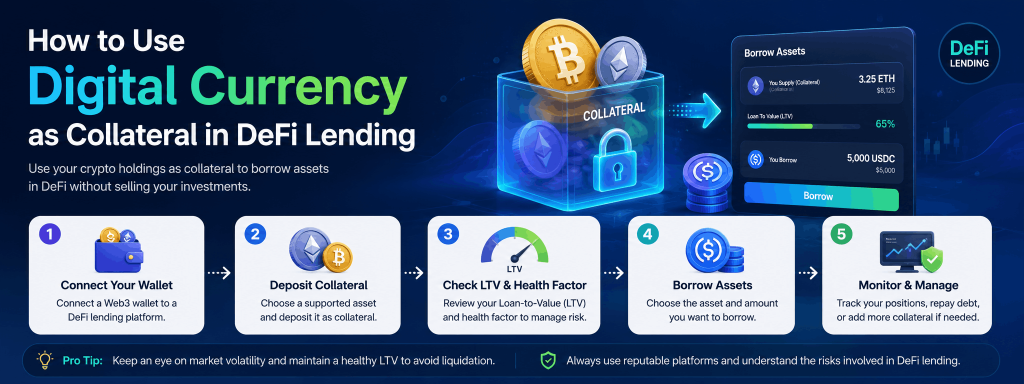
DeFi platforms allow you to leverage your existing digital currency, such as Ethereum (ETH), as collateral to borrow other tokens without having to sell your assets.
This is especially beneficial if you’re bullish on a cryptocurrency like Ethereum in the long term but want to access liquidity for short-term trades.
By using Ethereum as collateral, you can borrow other crypto assets and still retain ownership of your Ethereum, allowing you to benefit from any future gains.
How Collateral Works in DeFi
On DeFi lending platforms, before borrowing tokens, users are required to provide collateral, typically in the form of a cryptocurrency with higher value than the loan amount.
This system, known as over-collateralization, helps mitigate the risk of default, ensuring that the borrower will repay the loan.
If the loan is not repaid, the smart contract automatically liquidates the collateral to cover the debt, protecting the lender.
Frequently Asked Questions
How do I use digital currency as collateral in DeFi lending?
To use digital currency as collateral in DeFi lending, deposit your cryptocurrency into a DeFi lending protocol such as Aave or Compound. The platform locks your crypto as collateral, allowing you to borrow another cryptocurrency or stablecoin based on the value of your deposited assets.
What happens if the value of my collateral drops?
If the value of your digital currency falls below the protocol’s required collateral ratio, your position may be liquidated. This means part or all of your collateral could be sold automatically to repay the loan, so it’s important to monitor market movements and maintain sufficient collateral.
What is Crypto Loan Liquidation?

Crypto loan liquidation occurs when the value of your collateral falls below the required level to cover the loan due to the volatility in the cryptocurrency market.
This happens when the market value of the collateral assets, such as Bitcoin or Ethereum, drops below the amount borrowed, triggering a liquidation event to protect the lender from losses.
When you take out a crypto loan on a DeFi lending platform, you must provide more collateral than the loan’s value (known as over-collateralization).
As long as the collateral remains higher in value than the loan, the loan term can continue indefinitely.
Frequently Asked Questions
What is crypto loan liquidation?
Crypto loan liquidation occurs when the value of a borrower’s collateral falls below the minimum required level set by a lending protocol. The platform automatically sells part or all of the collateral to repay the outstanding loan and protect lenders.
How can I avoid crypto loan liquidation?
You can reduce the risk of liquidation by maintaining a healthy collateral ratio, monitoring market conditions, adding more collateral when needed, or repaying part of your loan if the value of your collateral declines significantly.
What are the best Decentralized lending platforms?
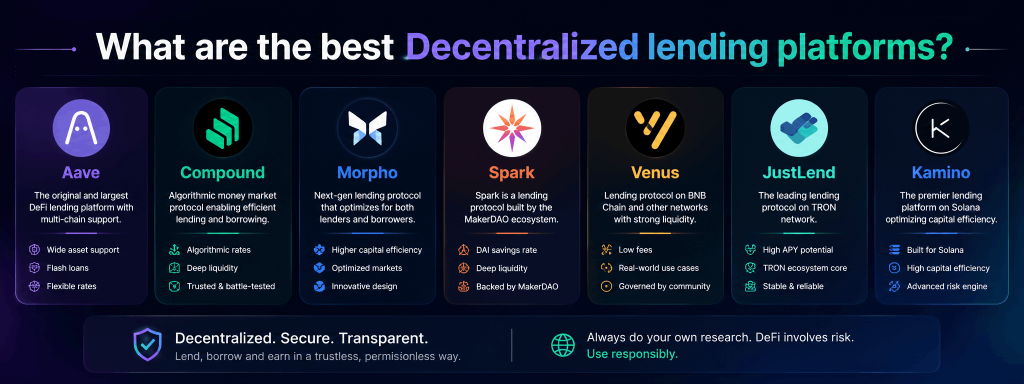
Here’s a list of the most popular and trusted DeFi lending platforms that offer secure, decentralized solutions for lending and borrowing crypto assets.
Top Decentralized Lending Platforms
1. Aave
Aave is one of the leading decentralized lending platforms. Built on Ethereum, it allows users to lend and borrow a variety of crypto assets by contributing to liquidity pools. Aave stands out for offering flash loans and rate-switching features. It uses smart contracts to ensure automated, transparent lending operations, giving users full control over their funds.
Aave users can lend Ethereum to earn interest or borrow stablecoins without having to sell their ETH. The platform allows switching between stable and variable interest rates to suit different market conditions.
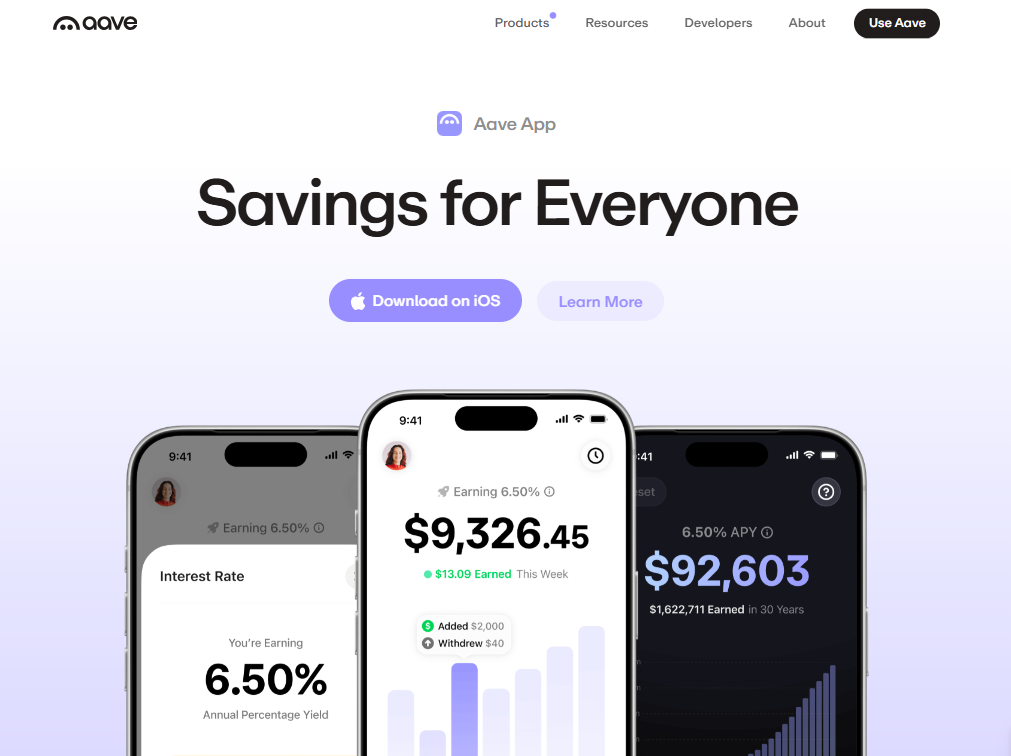
Best For: Beginners and experienced DeFi users
Key Features
- Multi-chain support
- Variable and stable borrowing options
- Flash loans
- High liquidity
- Strong security reputation
2. Compound Finance
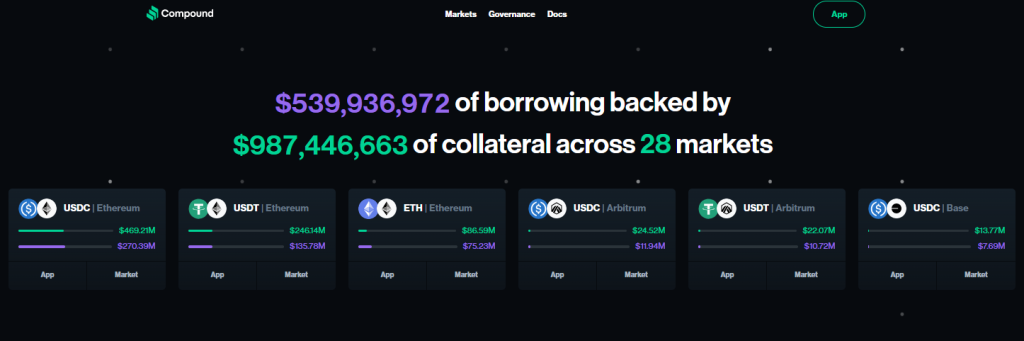
Compound is one of the pioneers of DeFi lending and helped bring decentralized borrowing and lending into the mainstream. The protocol allows users to deposit supported cryptocurrencies and earn interest, while borrowers can access funds by providing collateral.
Best For: Ethereum users seeking a straightforward lending experience
Key Features
- Automated interest rates
- Decentralized governance
- Transparent smart contracts
- Established market presence
3. Morpho
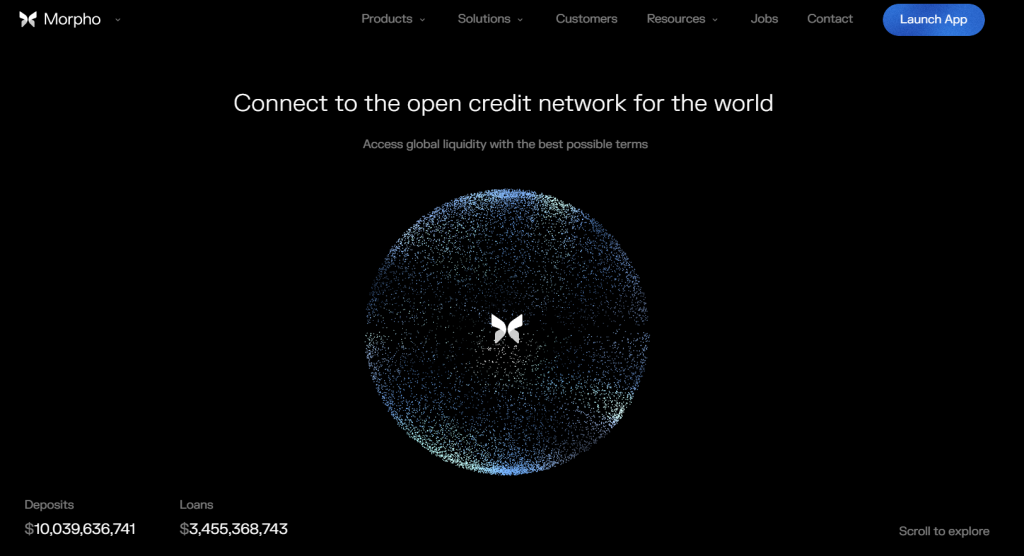
Morpho has quickly become one of the fastest-growing lending protocols in the DeFi space.
The platform is designed to improve capital efficiency by optimizing how lenders and borrowers interact, often helping users access more competitive interest rates than traditional DeFi lending markets.
Best For: Users seeking higher capital efficiency
Key Features
- Optimized lending markets
- Improved interest rates
- Institutional adoption
- Growing ecosystem
4. Spark Protocol
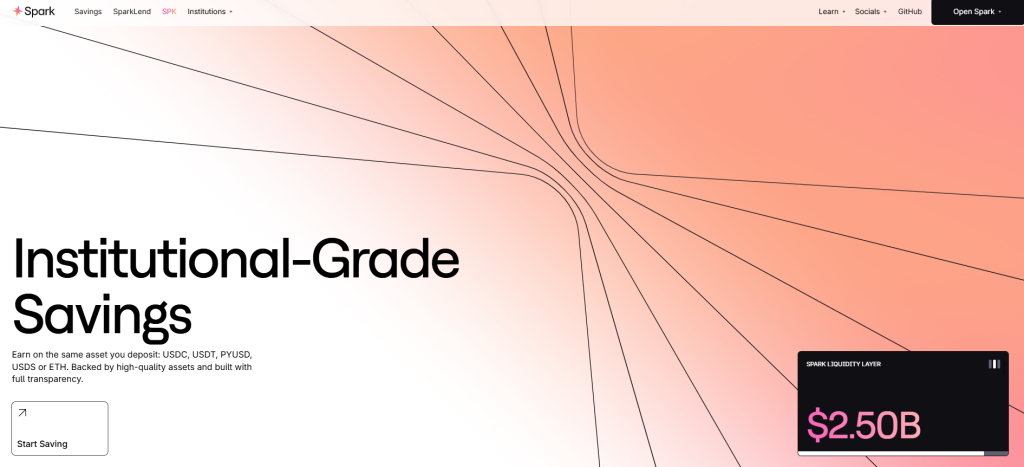
Spark is the lending protocol developed within the Maker ecosystem. It focuses heavily on stablecoin lending and borrowing, particularly involving DAI and USDS.
Because it is closely integrated with Maker’s infrastructure, Spark has become a popular destination for users seeking relatively stable DeFi yields and borrowing opportunities.
Best For: Stablecoin lenders and borrowers
Key Features
- Maker ecosystem integration
- Strong stablecoin liquidity
- Competitive borrowing rates
- Simple user experience
5. Venus Protocol
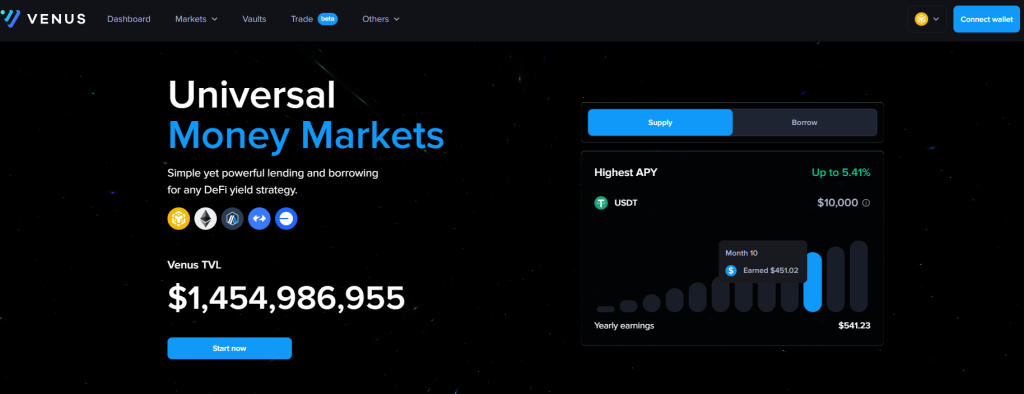
Venus is one of the most prominent DeFi lending protocols on the BNB Chain, offering users a range of services including lending, borrowing, and the ability to mint synthetic stablecoins using cryptocurrency as collateral.
Best For: BNB Chain users
Key Features
- Low transaction fees
- Fast transactions
- Stablecoin borrowing
- Strong BNB Chain liquidity
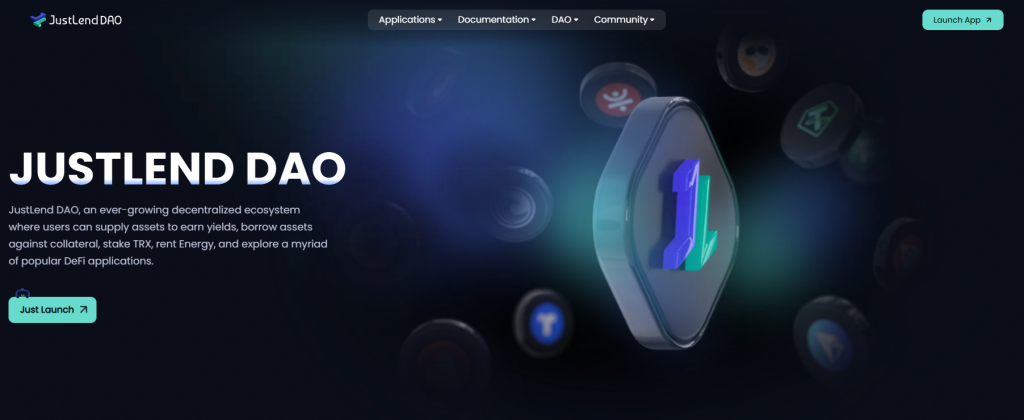
6. JustLend
JustLend is the largest decentralized lending protocol on the TRON blockchain. Users can earn interest by supplying digital assets or accessing loans using collateralized borrowing.
The platform benefits from TRON’s low fees and high transaction throughput, making it attractive for users who prioritize affordability.
Best For: TRON ecosystem participants
Key Features
- Low network costs
- Fast transaction speeds
- Large TRON liquidity pools
- Simple lending interface
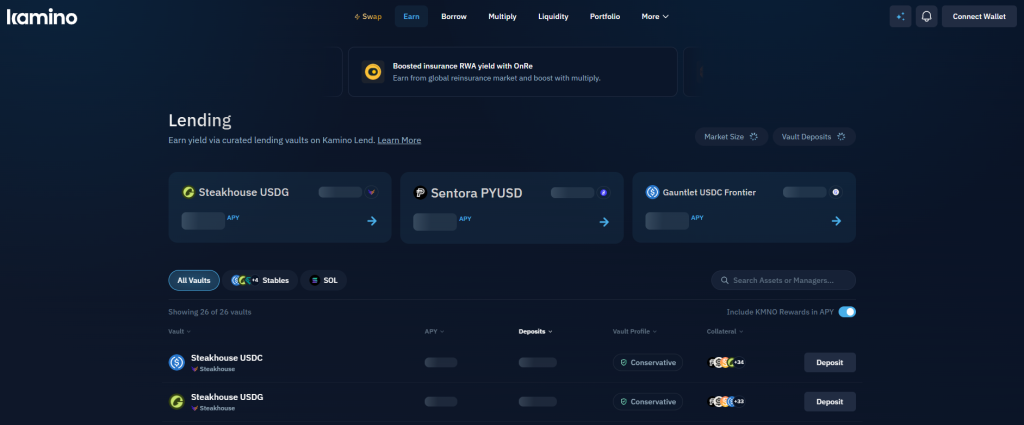
7. Kamino Finance
Kamino has become one of the most important lending protocols within the Solana ecosystem. The platform combines lending, borrowing, and yield generation tools into a streamlined user experience.
Its growing popularity reflects increased activity across Solana-based decentralized finance applications.
Best For: Solana users
Key Features
- Solana-native lending
- Integrated yield strategies
- Fast transactions
- Low fees
Pros and Cons
| Pros | Cons |
| No Traditional Intermediaries | Users can lend or borrow directly through smart contracts without banks or financial institutions. |
| Accessible Globally | Anyone with an internet connection and a crypto wallet can participate, regardless of location. |
| Potentially Higher Returns | Lenders often earn higher interest rates compared to traditional savings accounts. |
| 24/7 Availability | DeFi lending platforms operate around the clock without banking hours or holidays. |
| Fast Transactions | Loans and deposits can be processed within minutes rather than days. |
| Transparency | Transactions and protocol rules are recorded on public blockchains and can be independently verified. |
Conclusion
DeFi lending has transformed the way people access loans and earn passive income from their cryptocurrency holdings. By replacing traditional financial intermediaries with smart contracts, decentralized lending platforms make borrowing and lending more transparent, accessible, and efficient.
You might also like:
Frequently Asked Questions
What is DeFi lending?
DeFi lending is a decentralized financial service that allows users to lend or borrow cryptocurrency through smart contracts instead of traditional banks.
How does DeFi lending work?
DeFi lending works through liquidity pools funded by users. Borrowers lock cryptocurrency as collateral and receive a loan, while lenders earn interest generated from borrowing activity.
Is DeFi lending safe?
DeFi lending can be relatively safe when using established protocols with audited smart contracts, but it still carries risks such as smart contract exploits, liquidations, stablecoin failures, and market volatility.
Can you make money with DeFi lending?
Yes. Users can earn passive income by supplying cryptocurrency to lending protocols. Returns vary depending on the asset, market demand, and the lending platform being used.
What is collateral in DeFi lending?
Collateral is cryptocurrency deposited by a borrower to secure a loan. If the value of the collateral falls below a required threshold, the protocol may liquidate part of the position to repay the loan.
What happens if my collateral is liquidated?
If your collateral value drops too far relative to your loan amount, the protocol automatically sells a portion of your collateral to maintain solvency and protect lenders.
What are the best DeFi lending platforms?
Some of the most popular DeFi lending platforms include Aave, Compound, Morpho, Spark, Venus, JustLend, and Kamino. The best choice depends on your preferred blockchain, risk tolerance, and investment goals.
Do I need a credit score to borrow crypto?
No. Most DeFi lending platforms do not require credit checks. Instead, loans are secured using cryptocurrency collateral deposited into the protocol.
What is the difference between DeFi lending and traditional lending?
Traditional lending relies on banks, credit checks, and intermediaries, while DeFi lending uses smart contracts and blockchain technology to automate the lending process without requiring centralized approval.
Is DeFi lending legal?
DeFi lending is legal in many jurisdictions, but regulations vary by country. Users should check local laws and tax requirements before participating in decentralized finance activities.
 ABOUT THE AUTHOR
See More
ABOUT THE AUTHOR
See More


Sidebar rates

