What Are Crypto Trading Signals?

Cryptocurrency trading can be overwhelming, especially for beginners. The market is fast-moving, volatile, and sometimes unpredictable. This is where crypto trading signals come in. They are alerts or recommendations designed to guide traders on the best times to buy or sell cryptocurrencies. In this guide, we explain everything you need to know about crypto signals, how they work, their benefits, risks, and how to use them effectively.
Understanding Crypto Trading Signals
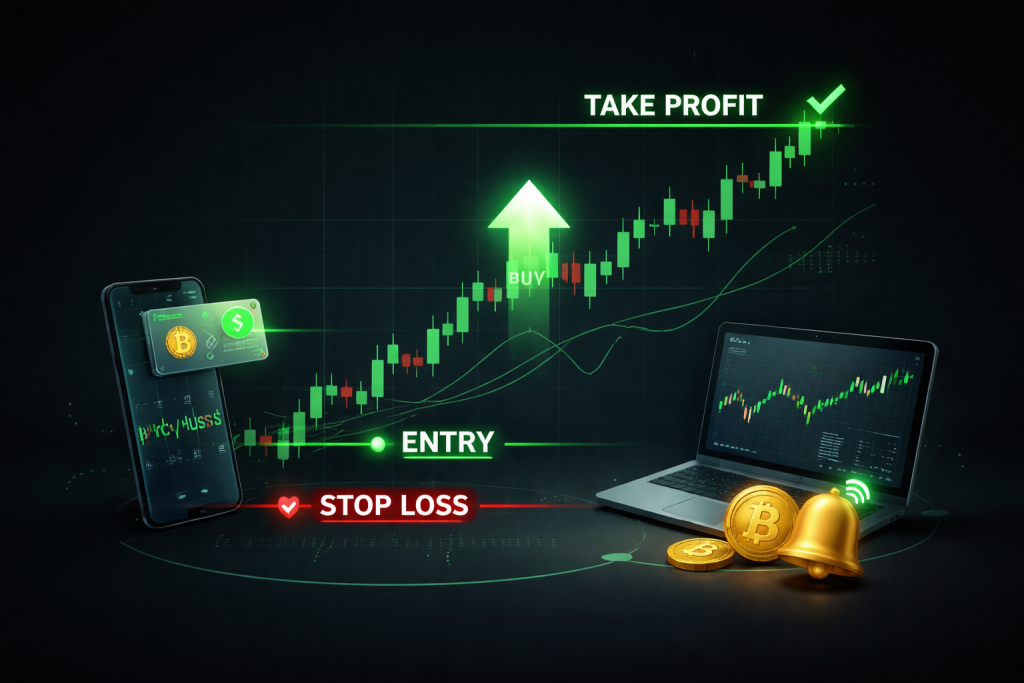
A crypto trading signal is essentially a trade recommendation. It provides information on which cryptocurrency to trade, the direction of the trade (buy or sell), and specific price levels for entry, take profit, and stop-loss. Signals are generated either manually by expert traders or automatically through algorithms and AI-driven systems.
Signals help traders save time, improve decision-making, and navigate the complex crypto market with more confidence. They can be delivered through messaging apps, trading platforms, email, or specialized signal services.
 | Minimum Deposit: $100 Regulated by: CBI, BVI, FSC, ASIC, FSCA, JFSA, FFAJ Crypto: Yes |
How Crypto Trading Signals Work
Each crypto trading signal provides a structured trade setup. The typical components of a signal include:
- Cryptocurrency Pair: This identifies the trading pair, such as BTC/USDT or ETH/USDT.
- Trade Direction: Indicates whether to buy (go long) or sell (go short).
- Entry Price: The price at which the trade should be opened.
- Take-Profit Targets: Levels where profits can be secured if the trade moves in the expected direction.
- Stop-Loss Level: A level to minimize losses if the market moves against the trade.
- Timeframe: The expected duration for the trade setup to be valid.
Example Signal:
- Pair: BTC/USDT
- Action: Buy
- Entry: $28,500
- Take Profit: $30,000
- Stop Loss: $27,800
This signal tells the trader that Bitcoin is expected to rise from $28,500 to $30,000, while risk is managed with a stop-loss at $27,800.
 | Minimum Deposit: $50 Regulated by: AUSTRAC, BAFIN, CIMA, ESCA, CySEC, FSC, FMA, MAS, TFG, VFSC Crypto: Yes |
Types of Crypto Trading Signals
Signals can be classified into three main types, depending on how they are generated:
1. Manual Signals
Manual signals are created by professional traders or analysts. These experts study charts, news, and technical indicators before providing trade recommendations. Manual signals often include explanations or analysis, helping users understand the reasoning behind the trade. This type of signal is particularly useful for beginners who want to learn trading strategies.
2. Automated Signals
Automated signals are generated by trading software or bots. These systems scan the market continuously using predefined algorithms and technical indicators to find potential trading opportunities. Automated signals reduce human error and allow traders to act quickly in volatile markets.
3. AI-Based Signals
Some signal providers use artificial intelligence and machine learning to process large datasets, including market trends, social media sentiment, and blockchain activity. AI-based signals aim to identify patterns that human analysts might miss, offering potentially more accurate predictions.
 | Minimum Deposit: $25 Regulated by: FSC, MISA Crypto: Yes |
How Crypto Signals Are Generated
Signal providers use different forms of analysis to generate trading recommendations:
- Technical Analysis: Using indicators such as moving averages, MACD, RSI, and trend lines to predict market movements.
- Fundamental Analysis: Considering news events, regulations, partnerships, and economic factors that could impact crypto prices.
- On-Chain Analysis: Examining blockchain data like wallet activity, large transactions, and exchange inflows/outflows.
- Market Sentiment Analysis: Tracking social media trends and public sentiment to gauge investor behavior.
By combining these methods, signal providers attempt to forecast price movements before significant market changes occur.
 | Minimum Deposit: $10 Regulated by: ASIC, BaFin, CMA, CySEC, DFSA, FCA, SCB 73-89 % of retail investor accounts lose money when trading CFDs Crypto Yes (only CFDs) |
Free vs Paid Crypto Trading Signals
Crypto signals are available in both free and paid versions. Each has its own advantages and limitations:
Free Signals:
- Accessible to anyone.
- Useful for beginners, testing the waters.
- Often limited in frequency, detail, or accuracy.
Paid Signals:
- Usually, more detailed and frequent.
- Often backed by experienced traders or advanced algorithms.
- Includes educational material and risk management guidance.
While free signals can be a good starting point, paid signals often provide more reliable trade setups and support for serious traders.

 | Minimum Deposit: $50 Regulated by: CySEC, ASIC, FSA, SVG, FSCA Crypto: Yes |
Benefits of Using Crypto Trading Signals
Using trading signals can provide several advantages, particularly for new traders:
- Saves Time: Signals reduce the need for extensive chart analysis, allowing traders to act faster.
- Educational Value: Following professional signals helps beginners understand market analysis and trade structure.
- Faster Decision-Making: Signals allow traders to respond quickly to sudden market movements.
- Risk Management: Most signals include stop-loss levels and take-profit targets, helping traders limit potential losses.
- Confidence Boost: Signals provide a structured approach that can reduce stress for beginners.
 | Minimum Deposit: $5 Regulated by: FSC Crypto: Yes (not available under CySEC (EU) or DFSA (MENA). |
Risks and Limitations
Despite their benefits, crypto trading signals are not foolproof. Traders should be aware of potential risks:
- Unverified Providers: Some providers claim high success rates without proof.
- Market Volatility: Even strong signals can fail if markets move unexpectedly.
- Delayed Execution: Entering trades late can reduce the effectiveness of a signal.
- Over-Reliance: Relying solely on signals without learning trading skills can hinder long-term success.
The most successful traders use signals as a guide, combining them with their own research and sound risk management strategies.
 | Minimum Deposit: $0 Regulated by: FSCA, FSA, FCA, FSC, CMA Crypto: Yes |
How to Use Crypto Trading Signals Effectively
To get the most from crypto trading signals, follow these tips:
- Verify the Source: Only use signals from reputable providers with proven track records.
- Understand the Setup: Don’t blindly follow signals; know why the trade is suggested.
- Combine with Personal Analysis: Check charts and market conditions before acting.
- Stick to Risk Management: Use stop-losses and only invest amounts you can afford to lose.
- Track Performance: Keep a trading journal to monitor which signals work best for your strategy.
By treating signals as a tool rather than a guarantee, you can improve your trading outcomes while minimizing risk.
 | Minimum Deposit: 20 USD (Cent) Regulated by: FSA, FSC, FSCA, CMA, ASIC Crypto: Yes |
Popular Platforms for Crypto Signals
Crypto trading signals can be accessed on multiple platforms:
- Messaging Apps: Telegram and Discord often host signal groups.
- Trading Platforms: Some exchanges and brokers provide integrated signal services.
- Specialized Websites and Apps: Dedicated signal services offer both free and paid options.
Choosing a platform depends on your trading style, level of experience, and preferred method of receiving alerts.
 | Minimum Deposit: $10 Regulated by: FSCA, FSC, FSA Crypto: Yes |
Are Crypto Trading Signals Profitable?
Crypto signals can be profitable, but success depends on several factors:
- Market conditions and volatility.
- Accuracy and reliability of the signal provider.
- The trader’s ability to execute trades quickly.
- Risk management strategies.
Signals are best used as part of a broader trading approach rather than a stand-alone method. Traders who combine signals with technical analysis, research, and disciplined risk control are more likely to achieve consistent results.
 | Minimum Deposit: $5 Regulated by: FSC, CySEC, ASIC Crypto: Yes |
Pros and Cons of Crypto Trading Signals
| ✓ Pros | ✕ Cons |
| Saves time by providing ready-made trade setups. | Not all signal providers are trustworthy. |
| Helps beginners learn how trades are structured. | Signals can fail in highly volatile markets. |
| Provides clear entry, take-profit, and stop-loss levels. | Late trade execution can reduce profitability. |
| Can improve decision-making in fast-moving markets. | Over-reliance can prevent traders from developing their own skills. |
| Offers structured guidance for risk management. | Some premium signal services can be expensive |
In Conclusion
Crypto trading signals are a valuable tool for both beginners and experienced traders. They provide structured trade ideas, insights, and guidance to navigate the highly volatile cryptocurrency market. While signals can save time and help improve decision-making, they are not a guaranteed path to profit.
The most effective approach is to use signals alongside personal analysis, learning, and proper risk management. This way, signals become a powerful aid in making informed trading decisions while building long-term trading skills.
You might also like:
- AvaTrade Review
- MultiBank Group Review
- Elev8 Review
- Pepperstone Review
- FISG Review
- XM Review
- HFM Review
- PU Prime Review
- IUX Review
- FBS Review
Frequently Asked Questions
What are crypto trading signals?
Crypto trading signals are trade recommendations that suggest when to buy or sell a cryptocurrency. They typically include entry prices, profit targets, and stop-loss levels to guide traders.
How do crypto trading signals work?
Signals provide traders with a structured trading plan, including the cryptocurrency pair, trade direction, entry price, take-profit targets, and stop-loss level.
Are crypto trading signals suitable for beginners?
Yes. Crypto signals can help beginners understand trading setups and market analysis while learning how experienced traders approach the market.
Are crypto trading signals always profitable?
No. Signals are not guaranteed to succeed because cryptocurrency markets are highly volatile and influenced by many factors.
What is the difference between free and paid crypto signals?
Free signals are widely available but may provide limited details or fewer trade opportunities. Paid signals are usually more detailed and may come with additional analysis or educational resources.
Who creates crypto trading signals?
Signals can be generated by professional traders, automated trading systems, or AI-based tools that analyze market data and trading indicators.
Where can traders receive crypto trading signals?
Signals are commonly shared through messaging apps like Telegram or Discord, trading platforms, and specialized signal websites or apps.
Do crypto signals include risk management guidance?
Most signals include stop-loss levels and profit targets to help traders manage risk and control potential losses.
Should traders rely only on crypto signals?
No. It is best to combine signals with personal research, technical analysis, and proper risk management.
How can traders choose a reliable signal provider?
Traders should look for providers with transparent performance records, realistic success rates, and positive feedback from users.
Crypto trading signals are trade recommendations that suggest when to buy or sell a cryptocurrency. They typically include entry prices, profit targets, and stop-loss levels to guide traders.
Signals provide traders with a structured trading plan, including the cryptocurrency pair, trade direction, entry price, take-profit targets, and stop-loss level.
Yes. Crypto signals can help beginners understand trading setups and market analysis while learning how experienced traders approach the market.
No. Signals are not guaranteed to succeed because cryptocurrency markets are highly volatile and influenced by many factors.
Free signals are widely available but may provide limited details or fewer trade opportunities. Paid signals are usually more detailed and may come with additional analysis or educational resources.
Signals can be generated by professional traders, automated trading systems, or AI-based tools that analyze market data and trading indicators.
Signals are commonly shared through messaging apps like Telegram or Discord, trading platforms, and specialized signal websites or apps.
Most signals include stop-loss levels and profit targets to help traders manage risk and control potential losses.
No. It is best to combine signals with personal research, technical analysis, and proper risk management.
Traders should look for providers with transparent performance records, realistic success rates, and positive feedback from users.
 ABOUT THE AUTHOR
See More
ABOUT THE AUTHOR
See More


Sidebar rates

